Description
What Are Meal Replacement Shakes?
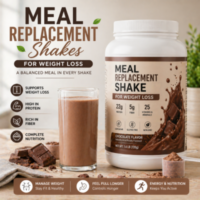
Meal Replacement Shakes for Weight Loss are exactly what they sound like — a drink designed to stand in for a full meal. They are typically formulated to give you a controlled amount of calories (usually between 200 and 400 per serving) while still delivering a reasonable dose of protein, fibre, vitamins, and minerals.
The idea is straightforward. Instead of reaching for a burger at lunch or standing in front of the fridge for twenty minutes after work, you mix up a shake, drink it, and move on with your day — all while keeping your calorie intake in check.
They come in powder form (mix with water or milk) or pre-made ready-to-drink bottles. Flavours range from chocolate and vanilla to more adventurous options like salted caramel or matcha. Some taste genuinely good. Others, honestly, taste like chalk in a pouch.
How Do They Actually Help With Weight Loss?
The core reason meal replacement shakes can support weight loss is simple — calorie control. Most people do not realise how many calories are in their everyday meals. A homemade pasta dish might have 700 calories. A café lunch could easily hit 900. Swap one of those for a 300-calorie shake and you have created a real calorie deficit without much effort.
Beyond that, a well-formulated shake tends to be high in protein. Protein keeps you fuller for longer and helps preserve muscle mass while you are in a calorie deficit — which matters a lot if you want to lose fat rather than just weight on the scales.
Research has consistently shown that people using meal replacements as part of a structured plan tend to lose more weight in the short term compared to those trying to eat less through conventional dieting alone. A study published in the journal Obesity Reviews found that meal replacement plans led to significantly greater weight loss at one year compared to food-based calorie-restricted diets.
That said, it is worth being honest — the shake itself is not magic. It is the calorie reduction and the structure it creates that drives the results.
The Real Benefits Worth Knowing
Convenience is massive. For busy Australians juggling work, kids, and a social life, meal planning and prep can feel impossible. A shake takes two minutes. There is no cooking, no cleanup, and no decision fatigue. That alone can make a big difference when willpower is running low at 7pm on a Tuesday.
Portion control is built in. One of the most common reasons diets fail is not a lack of desire — it is that people genuinely misjudge how much they are eating. With a shake, the portion is fixed. You know exactly what you are getting.
They reduce choice fatigue. Having to decide what to eat three times a day, every day, is mentally exhausting. Replacing one or two of those decisions with a consistent, healthy option takes pressure off your brain and reduces the likelihood of impulse eating.
They can work well as a bridge. If you are transitioning to a healthier way of eating but haven’t quite got the hang of cooking nutritious meals from scratch, shakes can fill the gap while you build those habits.
The Risks and Downsides You Should Know About
Now for the honest part — because there are real downsides here that do not get talked about enough.
They do not teach you how to eat. This is the big one. If you lose weight on shakes but never learn how to make good food choices, the weight tends to creep back the moment you stop using them. Shakes can be a useful tool but they are not a long-term strategy on their own.
Nutrient gaps are possible. Not all shakes are created equal. Some are well-formulated with a broad spectrum of micronutrients. Others are essentially just flavoured protein powder with a few added vitamins. If you are replacing multiple meals a day with a poor-quality product, you could end up short on things like iron, magnesium, omega-3s, and various antioxidants that come naturally from whole foods.
Digestive issues for some people. Many shakes contain artificial sweeteners, thickeners, or sugar alcohols that can cause bloating, gas, or stomach discomfort — particularly in people with sensitive guts or IBS.
They can affect your relationship with food. Eating is not just fuel. It is social, cultural, emotional, and sensory. Over-relying on shakes can sometimes disconnect people from the pleasure of eating real food, which is not ideal for long-term wellbeing.
Muscle loss is a risk if protein is too low. If the shake you’re using is low in protein and you’re cutting calories significantly, your body may start breaking down muscle for energy. Always check the protein content — aim for at least 20–25g per serving.
Who Are Meal Replacement Shakes Best Suited For?
They work well for people who struggle with meal prep time, those who tend to overeat because they make impulsive food choices when hungry, and people who want a structured, easy entry point into a calorie-controlled routine.
They are less ideal for people who want to learn sustainable cooking habits, those with complex dietary needs or medical conditions (always speak to your GP or dietitian first), and anyone who tends to use food restriction as a way of coping with emotional stress — the restrictive nature of shakes can sometimes reinforce unhealthy patterns.
What to Look For in a Quality Shake
Not all products deserve shelf space. Here is what to actually check before you buy:
Protein content. Look for at least 20g per serving. Whey protein isolate, pea protein, and brown rice protein are all solid options. Avoid products where protein is listed low on the ingredients list.
Calories per serving. A true meal replacement should sit between 200–400 calories. Anything under 150 is essentially a protein snack, not a meal.
Fibre. At least 3–5g of fibre per serving will help you feel satisfied and support gut health.
Micronutrient profile. Look for shakes that cover at least 25–33% of your daily recommended intake for key vitamins and minerals. This turns a shake into a genuine meal replacement rather than just a protein drink.
Minimal artificial additives. The shorter the ingredients list, generally the better. Be cautious of products loaded with artificial sweeteners like sucralose and acesulfame-K, especially if you have a sensitive stomach.
No excessive sugar. Some “healthy” shakes are surprisingly high in added sugar. Aim for under 10g of sugar per serving.
How to Use Them Effectively
The most successful approach is usually to replace one meal per day — typically breakfast or lunch — while eating one or two balanced whole-food meals for the rest of the day. This gives you the calorie benefit without completely disconnecting from real food.
Pair the shake with a piece of fruit or a small handful of nuts if you find one serving is not quite enough to hold you through to your next meal.
Do not try to replace all three meals with shakes unless you are doing so under medical supervision. This can lead to fatigue, irritability, and nutritional deficiencies fairly quickly.
Exercise still matters. Shakes reduce calories, but regular movement — even walking — will significantly improve your results and help maintain muscle as you lose weight.
Also, drink plenty of water. Shakes can be filling but they do not replace hydration, and being even mildly dehydrated can make hunger signals harder to read.
Best Options Available in Australia
The Australian market has grown considerably in recent years and there are now some genuinely good options available.
Optifast VLCD is one of the most clinically studied options and is often recommended by GPs and dietitians for people with higher weight loss goals. It is formulated to be nutritionally complete and comes in a range of flavours.
Aussie Bodies is a popular local brand that offers solid protein content and decent taste, widely available in supermarkets and Chemist Warehouse.
Herbalife Formula 1 has a large following in Australia and offers a reasonable nutritional profile, though it is best used as part of their broader programme for accountability and structure.
Atkins Shakes suit those following a low-carb approach, with good protein and fat content and minimal sugar.
Slim Fast is a more budget-friendly option that is widely available, though the nutritional profile is not as comprehensive as some of the above.
For those who prefer a more wholefood-based option, brands like Nuzest Clean Lean Protein can be blended with banana, oats, and nut butter to create a DIY meal replacement that is both nutritious and genuinely enjoyable.
The Bottom Line
Meal replacement shakes can absolutely be a useful part of a weight loss strategy — but they work best as a tool, not a solution. The people who get lasting results from them tend to use shakes to create structure and control calories in the short term while also working on building better eating habits in the background.
Choose a product with good protein, adequate fibre, and a solid micronutrient profile. Use them to replace one meal a day rather than starving yourself through liquid-only days. And if you have any underlying health conditions, please have a chat with your GP or an accredited practising dietitian before starting.
Done right, a good meal replacement shake can take a lot of the stress out of weight loss — and sometimes, that is exactly what you need to get moving in the right direction.